
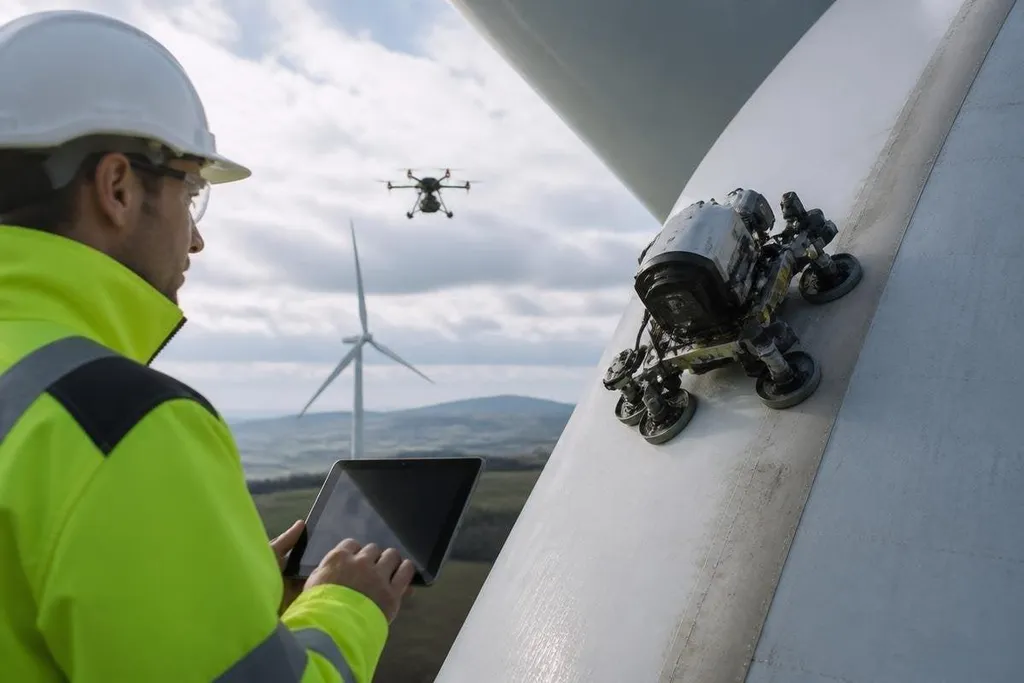
Wind turbine robots can already move around towers, inspect blades, and collect images from hard-to-reach places. AI helps turn that raw data into a short list of damage that a technician can check, which can cut repeat climbs and reduce missed defects.
- Cameras can scan blades for cracks, erosion, and surface damage.
- AI can sort large image sets and flag areas that need human review.
- Robots still need safe access plans, good data, and trained inspectors.
Where the robots work
A wind turbine inspection robot may fly near the blades, climb the tower, or move along a blade surface. Each design gathers a different view of the turbine, so the AI system must match its analysis to the robot's sensors and position.
A drone can use RGB cameras to record blade surfaces from several angles. A climbing robot can stay in contact with the tower or blade, which helps it inspect in wind that may make flight harder. Ground robots can also carry equipment around the turbine base and support work before or after an inspection.
The robot's job is data collection. It does not decide the repair plan by itself. That split matters because a dark mark in an image may come from dirt, shadow, lightning damage, or a crack.
What AI adds to inspection data
AI software can compare new images with earlier scans and look for changes in the same area. It can sort images by likely defect type, mark a region for review, and help inspectors focus on the sections with the clearest signs of damage.
The system may look for leading-edge erosion, chipped coating, loose parts, or unusual heat in a thermal image. It can also combine camera images with location data, so a technician can return to the same blade section instead of searching across hundreds of files.
That process works best when the robot records steady images with a known position and angle. Poor lighting, rain, motion blur, and water on the lens can reduce the quality of the result. AI cannot recover detail that the sensor never captured.
AI can flag a blade defect in a recorded image, but an operator still needs the turbine, sensor, weather, and test date behind that result. Wind turbine robotics reporting can tie those details to the machine and inspection before the next section looks at why the work matters.
Why operators care
Blade damage can reduce turbine output and increase the cost of repair if it grows between inspections. A robot can collect data without sending a person onto the blade for every check, while AI can help review that data when a site has many turbines.
The benefit depends on the task. A drone inspection may cover a blade quickly, but the drone cannot touch the surface or measure material depth. A climbing robot can reach the surface and carry contact sensors, but it needs a way to attach, move, and stop safely.
AI also gives operators a record that can be compared over time. A series of scans can show whether erosion is spreading, whether a repair is holding, or whether a suspected mark has stayed unchanged. That supports planned maintenance instead of a response based on one image.
Where the system still fails
Wind, rain, salt, ice, and changing light make outdoor inspection harder than a clean factory scan.
Turbine blades curve and taper, and their surface texture changes along the blade, so one model may not work equally well across every section.
Training data creates another limit. If an AI model has seen many examples of coating loss but few examples of lightning damage, it may sort those cases poorly. The operator needs records from the target turbine type and a clear way to send uncertain cases to a person.
The repair decision remains a human task. An inspector must check the image, review past records, judge the defect's location, and decide whether the turbine can keep running. I'd use AI to rank inspection images, not to approve repairs without a human check.
A practical buying checklist
Before choosing a robot and AI system, check these points:
- Sensor fit: Confirm the cameras or contact sensors can see the defects you need to find.
- Position data: Ask how the system records the blade section, camera angle, and inspection time.
- Weather limits: Get the operating limits for wind, rain, temperature, and surface moisture.
- Human review: Check how inspectors view flagged images and correct a wrong result.
- Record format: Make sure new scans can be compared with older inspections and exported to your maintenance system.
The next useful step is a small trial on one turbine type, using the same inspection route and a human-reviewed defect list. If the system can find known damage and produce repeatable records in site weather, it has a practical role; if it cannot, more AI will not fix the inspection process.