
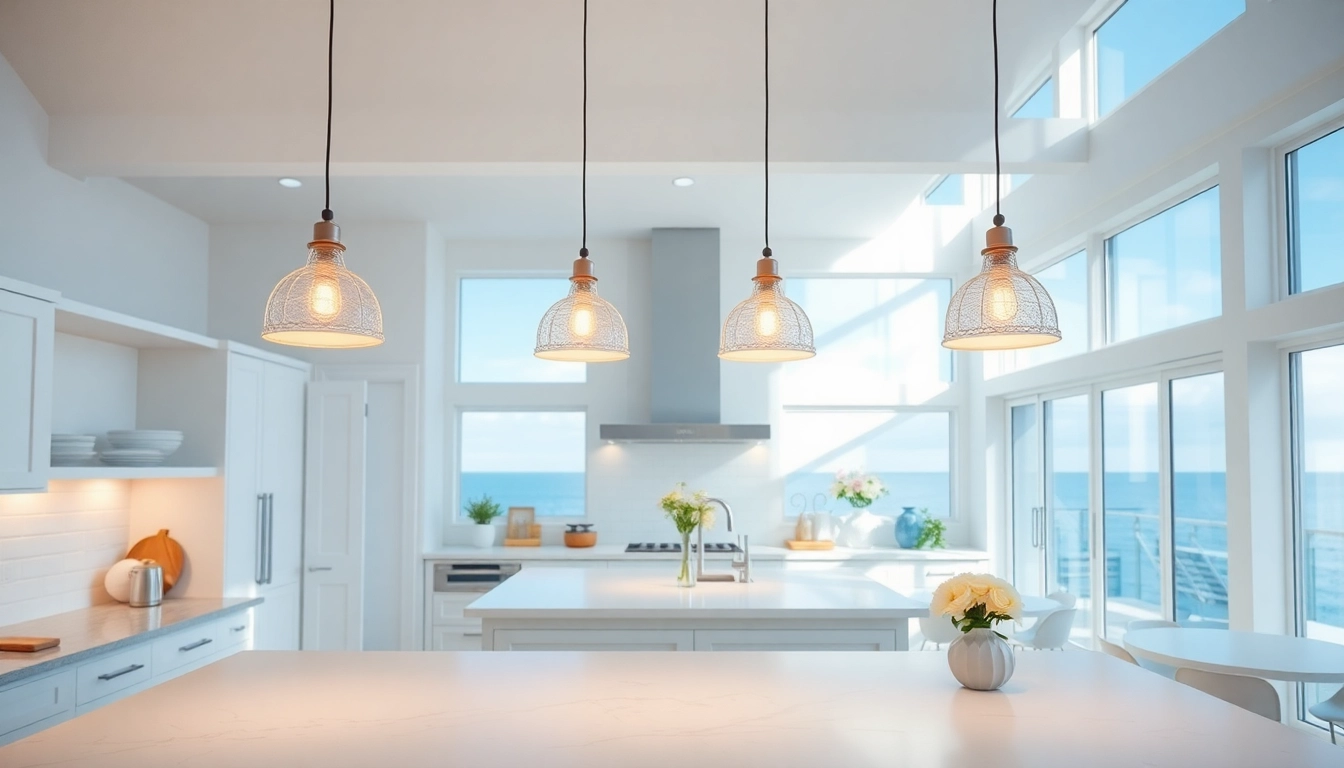
Understanding Island Lighting
What is island lighting?
Island lighting refers to specialized lighting fixtures designed to illuminate kitchen islands. These fixtures are typically suspended from the ceiling and come in various styles, sizes, and designs to enhance both functionality and aesthetics within the kitchen space. The right island lighting can transform typical kitchen tasks, enhance mood, and create an inviting atmosphere for family and guests. When considering island lighting, it’s essential to focus on the balance between illumination and design to ensure a seamless integration with the overall kitchen decor.
The role of lighting in kitchens
The kitchen is often considered the heart of the home, where culinary creativity is unleashed, and family dynamics flourish. This makes effective lighting crucial for safety, efficiency, and ambiance. Proper lighting enhances visibility during cooking, cleaning, and meal preparation. It can also highlight key design elements and serve as a focal point in a kitchen layout. Bright, direct light is essential over workspaces, while softer, ambient lighting can create a warm, inviting environment. Task lighting, such as that provided by island fixtures, is fundamental in achieving these objectives, helping to delineate areas within the kitchen.
Types of island lighting fixtures
When selecting island lighting, numerous fixture types can be employed depending on personal preference, kitchen style, and practical requirements. Popular types of island lighting fixtures include:
- Pendant Lights: These are among the most common fixtures used for island lighting. Available in various styles, shapes, and materials, they provide focused illumination directly above the island.
- Chandeliers: For a more dramatic effect, chandeliers can be hung over kitchen islands. They create a visually stunning centerpiece while providing ample lighting.
- Flush Mounts: These fixtures are ideal for lower ceilings and provide a streamlined look. They offer balanced illumination across the island without overcrowding the space.
- Track Lighting: This versatile option allows multiple light sources along a single track, enabling homeowners to direct light where needed while adding a modern touch.
Choosing the Right Style
Modern vs. traditional island lighting
When it comes to style, the choice between modern and traditional island lighting is often dictated by the overall design of the kitchen. Modern island lighting typically features cleaner lines, minimalistic designs, and materials like metal and glass. These fixtures often incorporate innovative technologies such as LED lights for energy efficiency.
In contrast, traditional island lighting is characterized by ornate designs, historical influences, and warm materials like wood and wrought iron. Traditional fixtures can evoke a sense of timeless elegance and often work well in classic or country-style kitchens. Homeowners should consider what complements their existing design elements and choose fixtures that create a harmonious atmosphere.
Color schemes for island lighting
The color scheme of island lighting is another critical consideration. It should either contrast or complement the surrounding colors in the kitchen. For instance, metallic finishes like brushed nickel or brass can add a modern twist when paired with darker cabinetry.
Warmer colors and finishes can recreate a cozy feel, which is particularly beneficial in traditional kitchen designs. Opting for fixtures in colors that tie together elements such as flooring, countertops, and cabinetry can enhance the cohesive look of the space.
Creating focal points with lighting
Using island lighting strategically can create focal points that draw the eye and define areas within the kitchen. For example, a sizeable pendant light can serve as a central feature particularly if it incorporates unique design elements or bold colors. This strategy can effectively highlight the kitchen island and make it the centerpiece of the space.
Mix and match different lighting styles in one room, ensuring they have common threads, whether it’s color, design, or material. This method adds depth while maintaining a sense of unity. By carefully curating lighting elements, homeowners can achieve an engaging visual dynamic in their kitchens.
Installation Basics
How to measure for island lighting
Accurate measurement is essential for successful installation of island lighting. The first step in this process is to measure the island’s width and length. Generally, pendant lights should be spaced evenly; for instance, if using three pendant fixtures, it is common to place them approximately 30-36 inches apart. The height at which the fixtures hang is equally important; typically, pendant lights are suspended 30-36 inches above the island’s surface, ensuring effective illumination while allowing clear sight lines.
Electrical considerations for installation
Before proceeding with installation, addressing electrical requirements is vital. Homeowners should ensure that the electrical capacity can handle the new lighting fixtures, particularly in kitchens where outlets may already be in use. This may involve consulting an electrician to evaluate circuits and make necessary upgrades.
Wiring should be adequately insulated and installed as per local building codes to ensure safety. Additionally, consider incorporating dimmer switches, allowing flexibility in lighting intensity to adapt to various kitchen activities and moods.
Placement tips for maximum effect
The placement of island lighting should enhance both function and aesthetics. Fixtures need to be balanced with the size of the island and surrounding elements. In larger areas, multiple fixtures ensure proper coverage, while smaller islands may only require a single pendant or flush mount. Placing fixtures directly above work areas will provide the necessary task lighting, while spacing them adequately can avoid harsh shadows.
Moreover, it’s imperative to keep the height adjustments aligned with potential obstacles like kitchen cabinets or maximum ceiling height. Ensuring proper placement will enhance the kitchen’s overall usability and appearance, creating an inviting environment.
Maintenance and Care
Cleaning your island lighting fixtures
Regular maintenance of island lighting fixtures is crucial for longevity and performance. Dusting and cleaning should be done routinely. Utilize a microfiber cloth to remove dust and a damp cloth for grime, taking care to avoid harsh chemicals that could harm finishes. Pay special attention to intricate designs that can accumulate dirt easily.
Light bulbs should also be checked regularly to maintain brightness levels, replacing any burnt-out bulbs promptly to ensure optimal lighting conditions.
Replacing bulbs and components
Replacing bulbs in island lighting fixtures is essential for ensuring continued performance and ambiance. Depending on the fixture, it may require specific types of bulbs, such as LED, incandescent or halogen. Choosing LED bulbs can be a great advantage due to their energy efficiency and longevity.
For fixtures with multiple bulbs, consider opting for the same brand and type when replacing bulbs to maintain a cohesive look and ensure even lighting. If fixtures themselves show wear, look into replacing components such as shades or glass covers instead of the entire fixture to save costs and maintain functionality.
Preventing common lighting issues
Common issues with island lighting such as flickering bulbs or insufficient illumination can often be mitigated with the right upkeep. Ensure that the fixtures are wired correctly and that bulbs are seated properly. For flickering lights, check connections and consider consulting an electrician if the issue persists.
Creating a routine maintenance schedule can help prevent these problems. This involves regularly checking the integrity of electrical components, replacing bulbs before they burn out completely, and cleaning the fixtures to prevent buildup that could impact brightness.
FAQs about Island Lighting
What height should island lighting be installed?
Generally, pendant lights should hang 30-36 inches above the island for optimal lighting without obstructing views.
Can I mix different styles of island lighting?
Yes, combining styles can add visual interest, but ensure they complement each other for a cohesive look.
Are LED lights suitable for island lighting?
Absolutely! LED lights are energy-efficient and come in various styles and colors, ideal for modern kitchens.
How many fixtures do I need for my island?
This depends on your island size; typically, two or three fixtures provide balanced illumination.
What’s the best color temperature for island lighting?
A warm white (2700K-3000K) is often preferred for creating a cozy, inviting kitchen atmosphere.